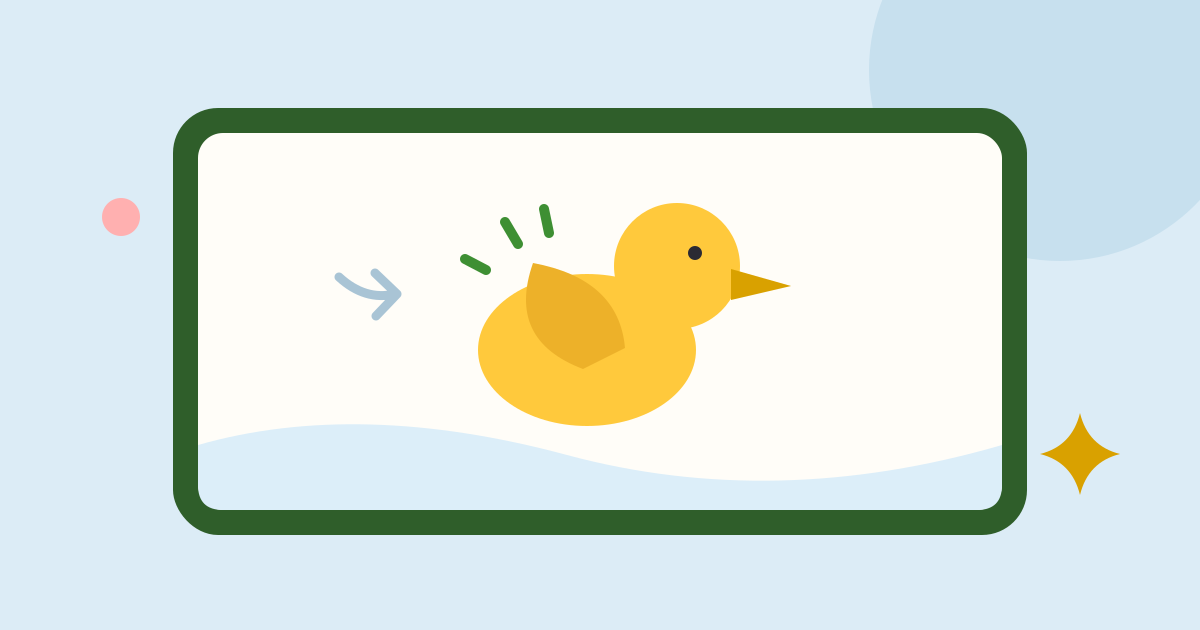
A duck flaps its wings while a voice says “flap.” On another screen, a star spins in the corner while a voice names a spoon. Both screens are animated. Only one of those movements directly shows the thing being explained.
When choosing a learning app for a young child, try asking what its movement is helping them notice. “Animated” and “interactive” describe features. They don't, by themselves, tell you what a child will learn.
What the research says about moving pictures
A 2015 meta-analysis combined 43 studies involving 2,147 children. It found small average advantages for technology-enhanced stories in story comprehension and expressive vocabulary. Multimedia that supported the story could help, while added interactive features such as hotspots and games could distract from it. Read the review.
A separate eye-tracking experiment involved 39 children ages four to six. They experienced animated and static storybooks. Motion attracted attention to relevant details, and the animated books produced better story comprehension in that study. Read the experiment.
These studies examined stories and particular designs. They are not ratings of today's app store, and they did not test Roarling. Using their findings to inspect a word or counting activity is our practical extension of the research, not a proven scorecard for apps.
Look at the moment when the word is spoken
If the activity says “jump,” can you see the character jump at that moment? If it names a picture, is that picture easy to locate? You can watch a single turn before handing over the device. There is no need to assess every animation in an entire app.
For counting, a useful design might highlight each object as it is counted. A less useful arrangement might send unrelated objects bouncing through the group. Those are examples of questions to ask about a design, not claims that the cited storybook experiments compared those exact screens.
Notice what a tap asks the child to do
Choosing the animal named in a question is different from tapping a corner character to hear a funny noise. The second can be enjoyable. The first has a direct connection to the learning question. An activity may contain both, so consider whether the extra action interrupts the task or waits until it has finished.
You might ask your child to show you what they are doing: “Which part are we counting?” Accept a point or a demonstration. If they are busy enjoying the character, share the moment and look again later. This is a chance to understand the activity, not to put your child on the spot.
Separate an attractive screen from a useful next turn
After one activity, can you tell what the child was asked to choose, count or notice? Is there an easy way to hear the prompt again? Can you pause or leave without starting another round? These are practical things a parent can inspect directly, even when a store description promises “educational fun.”
A correct tap immediately afterward is only one observation. If you want to carry the idea into play, find a related object in the room: count three toy cars or look for a spoon. Keep that invitation light. It isn't a controlled test of what caused any learning.
The same question works with a book
“What are we both looking at?” can be useful away from a screen, too. Our guide to pointing in picture books explores a study of page layout and new words. If you'd like to mix one short app activity with ordinary play, try the five-minute routine.