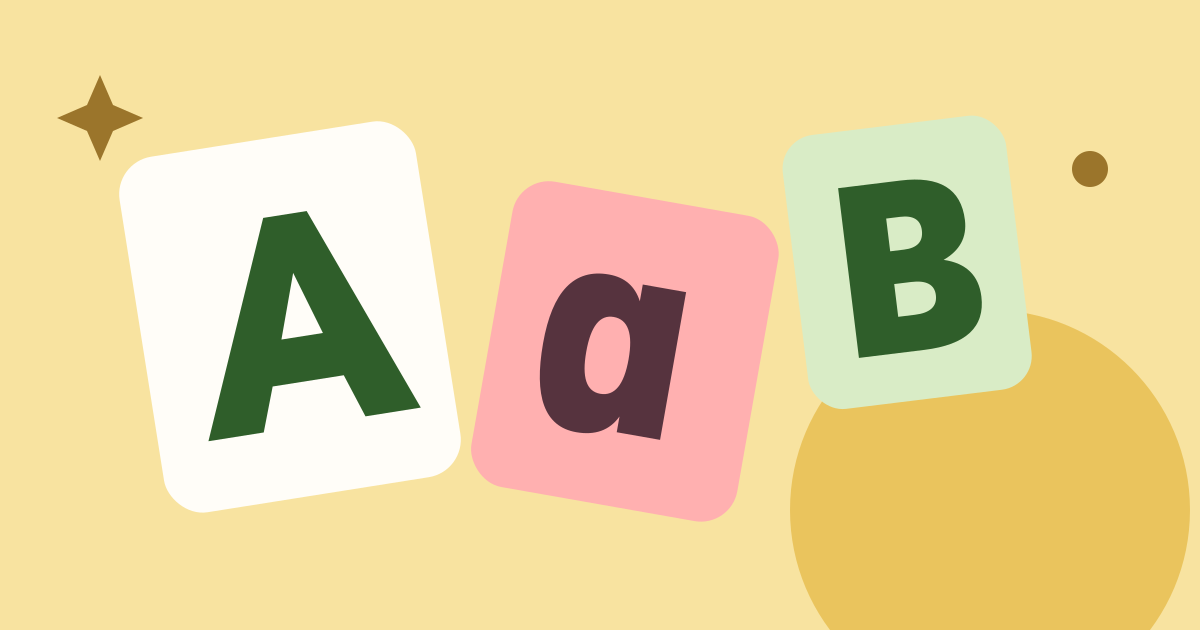
A letter on a lunch bag. A big B on a book cover. The first letter of your child's name. You already have plenty of places to start noticing letters together, without buying a set of flashcards.
These five alphabet games are for preschoolers and other early learners who are beginning to notice print. Pick the one that sounds fun today. Your child doesn't need to know the alphabet in order, and you don't need to get through all five.
1. Make a little letter delivery
Fold two sheets into pretend mailboxes. Label one A and one B. Make four paper envelopes with the same letters, then take turns delivering them. Your child can compare the shapes before saying a letter name.
Make it easier: use one mailbox and name the letter together. Change it up: write lowercase a on an envelope and show how it belongs with uppercase A. Explain the pair rather than expecting a child to guess.
2. Give a toy its own name sign
Pick a toy and give it a short, silly name. Perhaps a dinosaur called Rex. Write the name in large letters, point to R, and say, “This is R. It's the first letter in Rex.” Let your child decorate the sign. Another day, look for R on a book or cereal box.
The point is to connect print with something your child cares about. There is no need to make a worksheet or label every object in the house.
3. Play a beginning-sound picnic
Draw a pretend picnic with milk, a muffin and a sandwich. Say each word slowly and notice which start with /m/. You might say, “Milk and muffin start the same way. Listen: mmm.” Then show the letter m. Your child can add something wonderfully unsuitable to the picnic, such as a muddy monster.
A letter's name and its sound are different things. Tell your child which you are asking for. Some letters have more than one sound; stay with a familiar example rather than trying to explain every spelling rule at once.
4. Build a letter road
Draw a large L on paper. Drive a toy along the long line and around the corner. Name the letter together. Try another letter later, or let your child draw a road for you to follow.
Tracing a shape with a toy is an invitation to notice it. It is not a handwriting test, and the line does not have to be neat.
5. Let the child be the letter detective
Place two paper letters beside an open picture book. Ask your child to choose the letter you should find. Search together and let them tell you when you spot it. If the page feels busy, use a large-print title or write a short pretend sign yourself.
What if my child mixes letters up?
Show the match, name it, and keep the game moving. Try fewer choices or a bigger letter. You can say, “This one is B. Let's put B in its mailbox together.” Stop when either of you has had enough; the activity can wait for another day.
For children ready for more, add lowercase partners or listen for a familiar beginning sound. Follow their interest and the approach used by their teacher rather than racing through all 26 letters.
Where Roarling fits
Roarling's short letter and picture activities can be another way to practice with a parent nearby. The current app uses taps, with optional parent-enabled speaking practice on supported devices. A voice result is not a pronunciation grade. These games work just as well without the app.
Ready for a change of pace? Try our everyday counting activities. If finding time is the tricky part, here's a five-minute routine you can keep simple.