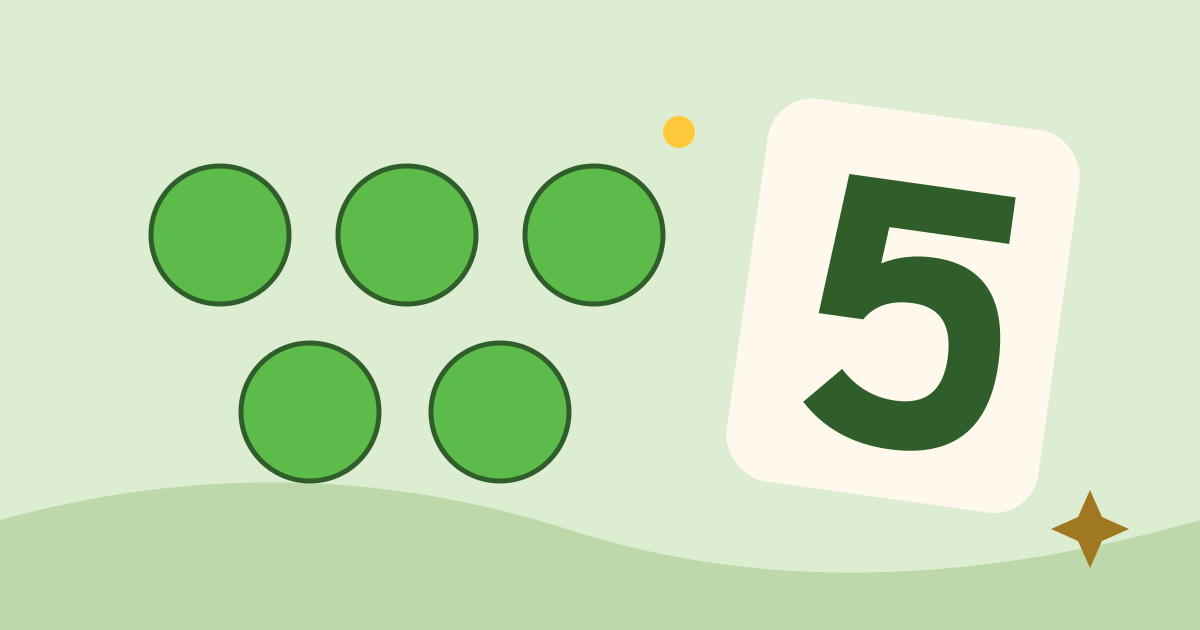
Your child might race through “one, two, three, four, five” and still count the same toy twice. That gives you a useful place to start: one number for each thing. A few toys on the floor are enough for a counting game.
Saying the number sequence and counting a group are different skills. These counting activities for preschoolers let you explore both. Start with two or three objects, move or touch each one as you count, then say how many you have altogether. Leave the bigger piles for another day.
1. Pack a pretend explorer bag
Ask for two toy animals for an adventure. Let your child put them into a bag one at a time, counting together. Empty the bag to check what came along. Change the request to one or three animals on another turn.
If a number gets skipped: pause and count beside your child. Moving each toy from one place to another makes it easier to notice what has already been counted.
2. Set a table for the toys
Put three soft toys around a pretend table. Give each one a paper plate. Ask, “Does everyone have a plate?” Count the toys, then the plates. Add a new guest and let your child decide what is missing.
This makes “one for each” something you can see. You do not need to introduce a formal math term to enjoy the game.
3. Make a dot-and-number parking lot
Draw parking spaces on a sheet of paper. Give one space a single dot and the numeral 1; give another two dots and the numeral 2. Park the matching number of toy vehicles in each space.
Start with one and two. When those feel familiar, draw a third space. A child can count the dots to check instead of needing to recognize the written numeral immediately.
4. Take a very small giant walk
Choose a clear space. Decide on three giant steps, then take them together, saying one number for each step. On the next turn, use little mouse steps. Ask your child to choose how many steps you will try.
Keep the space safe and the number small enough to remember. A seated version works too: tap a knee once for each number.
5. Rearrange the dinosaur crowd
Count four large toy animals in a line. Spread the same animals into a loose circle and wonder aloud, “Do we still have four?” Count again to find out. Then let your child rearrange them for you.
The goal is to explore a question together. Your child may want to count again every time. That is a useful part of the game, not something to hurry past.
How do we work toward counting to ten?
Add a little challenge when your child is comfortable with the smaller group. Try four objects after three, then another size on another day. If a larger pile becomes confusing, return to a small line of objects and touch each one together.
There is no deadline attached to these activities. You can also make the game interesting without adding more: let your child lead, change the toys, or ask them to show you how they checked.
From playroom to Roarling
Roarling includes tap-based counting activities with groups from one to ten. A parent can offer help whenever a child needs it. The app can be a small part of practice; handling real objects together gives numbers another place to make sense.
For a different kind of discovery, try our alphabet games for preschoolers. Or choose just one game for a short learning routine at home.